How to Apply for USA Jobs Online: Step-by-Step Guide
Updated June 2026
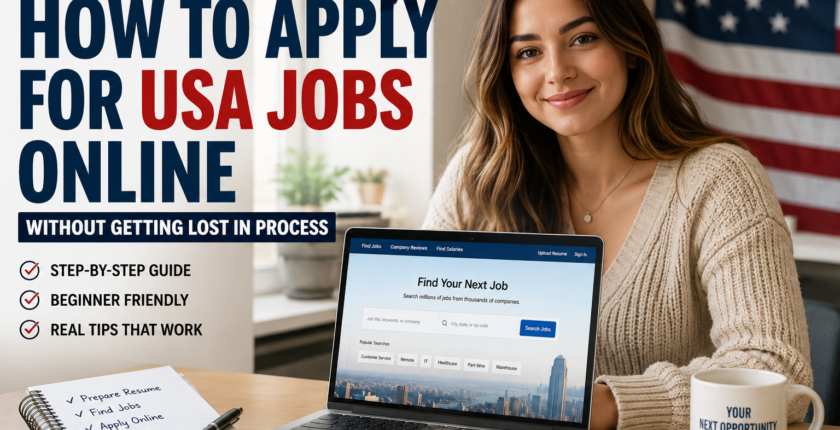
How to Apply for USA Jobs Online Without Getting Lost in Process
A real honest beginner guide to finding and applying for jobs in America from someone who has been through the frustrating parts too.
The first time I tried to apply for a job on Indeed I spent two hours filling out a profile uploaded my resume three different times because the site kept asking again and then hit submit. I never heard back. Not even a rejection email. Just silence.
That experience is way more common than people talk about. Everyone says “just apply online” like it is a two minute task. But if you are new to this the process can honestly feel confusing. Different platforms different resume formats background check requirements cover letters work authorization questions ATS systems that filter you out before any human even reads your name.
So this guide is not going to be a generic list of steps you can find anywhere. I want to walk you through the real process including the parts that trip most people up.

|Before You Even Open a Job Site
Most beginners jump straight to job boards and start clicking Apply on everything. That approach almost never works well. Before you touch any website you need three things ready.
First your resume needs to be in the right format. In the USA the standard is a clean one page PDF or Word document unless you are applying for a senior position. No photos. No fancy graphics. No columns with colored boxes. Those things look great to human eyes but they completely confuse the Applicant Tracking Systems (ATS) that most US companies use to screen resumes automatically.
Real talk: A lot of applicants get filtered out before a single human sees their resume. The ATS software scans for keywords from the job description. If your resume does not have those words it gets rejected automatically. This is why customizing your resume for each application actually matters.
Second you need a professional email address. Something like yourname2026@gmail.com is fine. But cool boy 1999 or nicknames do not read well to US hiring managers. It is a small thing but it does affect first impressions.
Third gather your work history information. Dates of employment job titles company names and your responsibilities in plain English. You will fill this in repeatedly across different platforms and you do not want to be guessing dates while you are in the middle of an application.
|Where People Actually Find Jobs in the USA Right Now
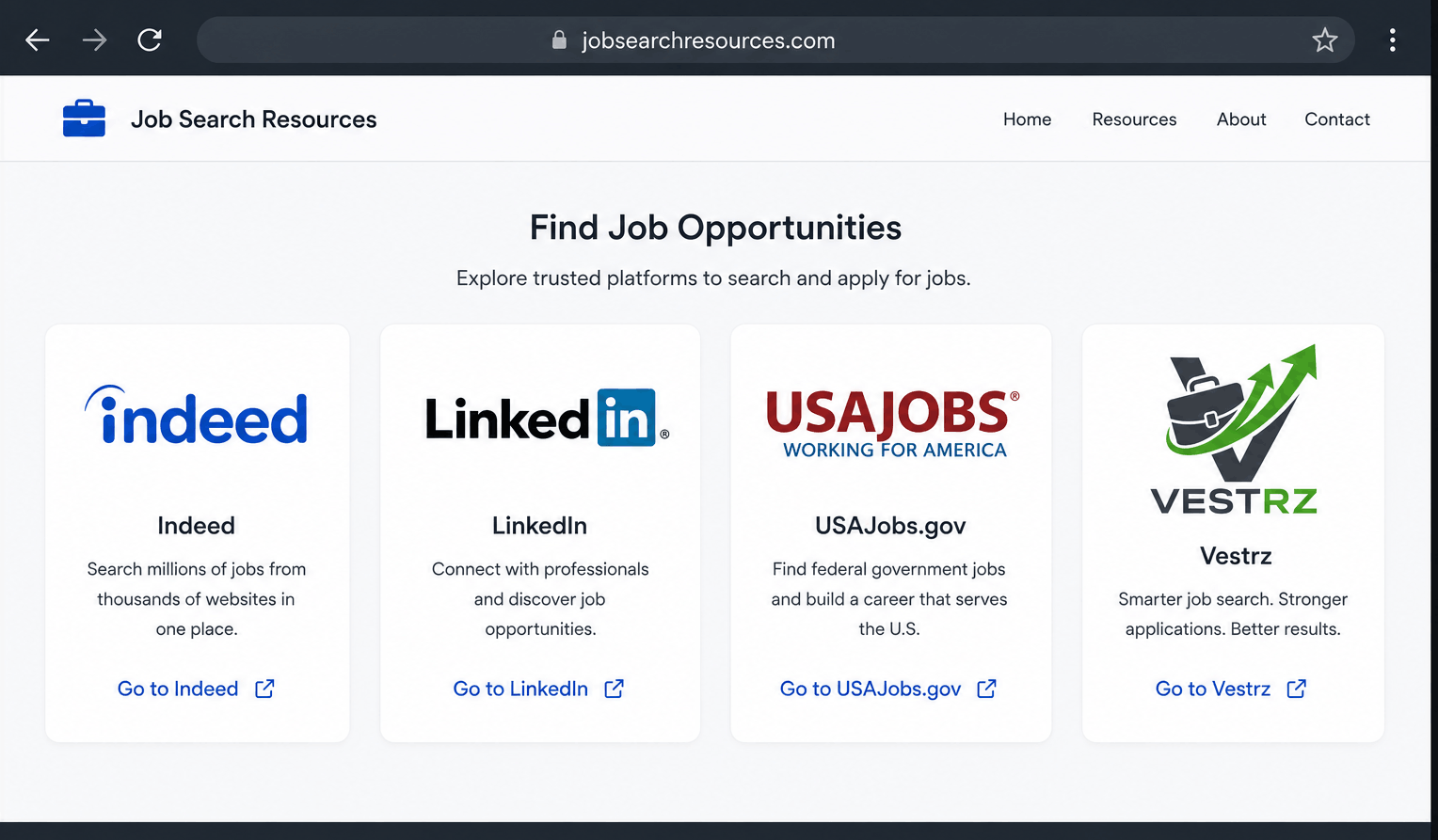
There are dozens of job sites but a handful of them account for the majority of real hiring. Here is where job seekers are actually finding success in 2026:
Biggest volume of listings. Good for entry level and mid level roles. Apply directly or get redirected to company websites.
Biggest volume of listings. Good for entry level and mid level roles. Apply directly or get redirected to company websites.
Official site for US federal government jobs. Different process longer timeline but good pay and strong benefits.
Job listings plus real company reviews and salary data from employees. Useful for research before applying.
Sends your profile to employers. Works well for warehouse logistics customer service and trade jobs.
Specifically for students and recent graduates. If you are new to the workforce this is worth setting up.
One thing worth knowing: many US companies also post jobs directly on their own websites under a “Careers” page. If there is a specific company you want to work for check their website directly and apply there too not just through third party boards.
|The Actual Step by Step Application Process
Here is how online job applications in the USA typically work from start to finish.
1 Search with the Right Keywords
Use job title plus location or “remote.” For example: “customer service representative New York” or “warehouse associate Texas.” Avoid searching too broadly or you will be overwhelmed. Filters for date posted (last 7 days) help you find fresh listings before they get flooded with applicants.
2 Read the Job Description Carefully
Most people skim it and apply. Bad idea. Read it fully and note the required skills and qualifications. Then look at your resume and ask honestly: Does my resume actually mention these things? If your experience matches but your resume does not reflect that the ATS will not know. Adjust your resume summary and bullet points to include relevant keywords naturally before applying.
3 Create an Account on the Platform
Most sites require you to register before applying. Use a real email you check regularly. Some platforms like LinkedIn carry your application history so keep your profile updated. For USAJobs.gov creating a detailed account profile is especially important because applications there are more involved.
4 Upload Your Resume and Fill Out the Form
Even when you upload a resume many applications ask you to manually enter your work history again. Yes it is annoying. Just do it. Some companies use their own hiring software like Workday Greenhouse or iCIMS and you will be redirected there. Create accounts on those platforms too because you will see them again with other companies.
5 Answer the Screening Questions Honestly
Many applications include knockout questions. Things like “Are you authorized to work in the US?” or “Do you have a valid driver’s license?” or “Are you available to work weekends?” Answer honestly. Some of these are hard filters. If you say yes to availability and then cannot do weekends it creates problems later. These questions are also used to verify you against your background check results.
6 Write a Brief Cover Letter (When Required)
Not every job needs one but when they ask write it. Keep it under 250 words. First paragraph: what job and why you are interested. Second paragraph: one or two specific skills you have that match. Third paragraph: short closing saying you would welcome the chance to talk. Do not copy a template word for word. Personalize it slightly for each company because hiring managers notice when it feels generic.
7 Submit and Track It
Keep a simple spreadsheet or even a notes app list. Write down: company name, job title, date applied, platform used and status. This sounds unnecessary until you have applied to 30 jobs and you get an email from a company and cannot remember what role it was or what you wrote in that cover letter. Tracking helps you follow up and stay organized.
Why Applications Get Rejected Before Anyone Reads Them
This is the part that honestly surprises most first time applicants. A huge number of rejections in the US hiring process never involve a human at all. They are automated.
How ATS Filtering Works
When you submit an application software scans your resume for keywords that match the job description. If enough keywords are missing your application is ranked low or filtered out completely. You never get seen by a recruiter.
This is why “tailoring your resume” is not just career coach advice. It is technically necessary. Take the key phrases from the job posting and make sure they naturally appear in your resume where your experience supports it.
Beyond the ATS issue here are other common reasons good candidates get rejected early:
❌ Resume has a photo decorative graphics or unusual formatting that breaks ATS parsing
❌ Work authorization question was answered incorrectly or inconsistently
❌ Resume email address or phone number was typed wrong so the employer could not reach you
❌ Applied weeks after the job was posted when the pipeline was already full
❌ Salary expectation given in the application was above the company range
❌ Missing a required certification that was listed as mandatory in the job posting
❌ Cover letter addressed to wrong company name after copying from a previous application

| Work Authorization: What You Need to Know
Every US job application will ask about your work authorization status. This is not optional and it is legally required. Your honest answer must match your actual immigration status.
The standard options you will see are US Citizen Permanent Resident (Green Card holder) work visa (H-1B, OPT, CPT, TN, etc.) or not authorized. If you are on OPT or CPT you are eligible to work but you will need to note that your authorization has an end date. Some employers will not sponsor visas so they filter out applicants who require sponsorship in the future.
The Form I-9 verification happens after you are hired not during the application. But the screening questions at the application stage are where employers first filter based on work authorization. Always answer accurately because discrepancies get discovered in background checks and can void your offer.
| What Happens After You Apply
Most people expect to hear back in a few days. The real timeline is different. Entry level retail and warehouse roles often respond within a week because they need to fill positions quickly. Corporate office roles can take two to six weeks. Government jobs at the federal level can take months.
If you have not heard back after two weeks on a corporate role a short follow up email to the recruiter is appropriate. Keep it brief: one sentence noting your continued interest and asking about next steps. Do not call unless they listed a phone number for inquiries.
If you are invited to interview the first round for most US companies in 2026 is a video call usually on Zoom or Microsoft Teams. Dress professionally from the waist up at minimum. Have a plain background. Test your audio and camera the night before. Have a printed or digital copy of your resume in front of you because interviewers will refer to it.
| Mistakes That Slow Down Your Job Search
These are things I see people doing that quietly hurt their chances and they do not realize it until much later.
❌ Applying to fifty jobs in one day with the same generic resume and expecting different results
❌ Not setting up job alerts so you miss new postings for days or weeks
❌ LinkedIn profile left incomplete or set to private while job searching
❌ Using weak passwords on job site accounts and missing interview invitations because emails went to spam
❌ Writing a resume objective statement instead of a professional summary with actual skills
❌ Listing references as “available upon request” instead of just having them ready
Things That Actually Help
✔️ Set up daily job alerts on Indeed and LinkedIn with your target role and location so you see fresh listings before they get hundreds of applicants
✔️ Keep your voicemail set up and professional because US recruiters do call and will not leave detailed messages if voicemail is full
✔️ Update your LinkedIn profile to “Open to Work” with your specific job titles so recruiters can find you directly
✔️ Use Resume.io or Canvafor clean ATS friendly resume templates just avoid the graphic heavy designs
✔️ Apply during the week, ideally Monday through Wednesday morning. Applications submitted then tend to be seen first
✔️ Research the company briefly before applying so your cover letter mentions something specific about them not just a generic paragraph
Government Jobs on USAJobs.gov Deserve Their Own Mention
If you are eligible to work in the US and want stability federal government jobs are genuinely worth looking at. They have structured pay scales strong benefits and job security that private sector jobs rarely match.
The process on USAJobs.gov is more involved than a standard application. You need to create a detailed profile that essentially functions as an extended resume. Each application requires you to answer assessment questions and write short explanations of your experience. Referral for an interview only happens when you score high enough on that assessment.
The timeline is long. Expect one to three months from application to offer in most cases. But the rejection rate also tends to be lower for applicants who meet the minimum qualifications because agencies have specific hiring targets they need to meet.

One Last Honest Thing
The online job application process in the USA is not perfectly fair and it is not always fast. Some highly qualified people apply dozens of times before getting an interview. That experience does not mean something is wrong with your qualifications. Often it comes down to timing ATS keyword matching and the number of internal candidates that companies already have in consideration.
What you can control is how prepared you are each time you apply. A tailored resume an honest and complete application quick responses to recruiters and a professional follow up go a long way. The people who stay consistent with that approach do eventually get through.
Good luck with your search. You have more options than you probably realize.