Amazon Warehouse Hiring Process Step by Step
USA Job Guide · Amazon Careers 2026
Amazon Warehouse Hiring Process Step by Step
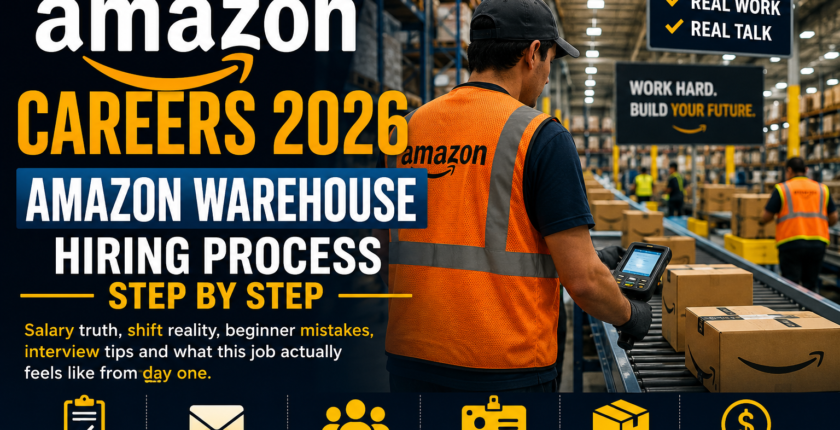
What nobody tells you before you apply is salary truth, shift reality, beginner mistakes, interview tips and what this job actually feels like from day one.

I know someone who applied to Amazon on a Monday afternoon. He got an email by Tuesday morning. Orientation was that same Friday. His first real shift started the following Monday. Less than two weeks from application to paycheck.
But here is the part nobody talks about. He called me after day three and said his feet hurt so bad he could barely walk up his apartment stairs. He had worn regular sneakers. He had no idea what rate tracking even meant. He almost missed orientation because he forgot to bring a second ID document. He got through it. A lot of people do not.
This guide covers the full Amazon warehouse hiring process the way I wish someone had explained it before a first application the salary reality how the interview actually goes,what the work feels like from day one and the mistakes that get people let go within their first 90 days.
Salary Reality: What Amazon Actually Pays
Most job seekers look at the starting pay and think it sounds solid. And compared to retail or food service Amazon does pay better for entry level physical work. But the full picture is more complicated than the listing shows.
Role / Location Typ / Start Pay / With Night Shift Diff
- Fulfillment Center (standard area
$16 to $18/hr
$17.50 to $20/hr
- Amazon (high cost city like NYC, LA
$18 to $22/hr
$20 to $24/hr
- Sort Center Associate
$15.50 to $17/hr
$17 to $19/hr
- Delivery Station Association
$16 to $18/hr
$17.50 to $20/hr
- Forklift / Reach Truck (certified)
$18 to $23/hr
$20 to $25/hr
Night shift adds roughly $1 to $2 per hour on top of base pay. For some people that math makes sense. For others permanently flipping their sleep schedule destroys their health and personal life within a few months. That tradeoff is real and worth thinking about before you accept a night position.
Peak season October through December brings mandatory overtime at most fulfillment centers. Workers regularly put in 50 to 60 hour weeks during this period. Your paycheck looks great but your body takes the hit. A lot of first timers burn out before January arrives.
Benefits are one of the stronger parts of the Amazon package. Health insurance vision dental,and 401k become available after 90 days at most facilities. Their Career Choice program pays up to 95 percent of tuition for approved certifications and degrees while you keep working. That is genuinely valuable if you use it strategically.

What the Work Actually Feels Like Every Day
People imagine moving some boxes around and scanning barcodes. The reality is that you are walking 8 to 15 miles on a concrete floor lifting items repeatedly throughout your entire shift and hitting a numerical productivity target the whole time. The first two weeks test your body in ways most jobs never do.
Picking is one of the most common starting roles. You walk the warehouse with a handheld scanner. The system tells you where to go you grab the item scan it drop it in your tote and move to the next location. The facility might be the size of several football fields. You repeat this for 10 hours with two 30 minute breaks and a 30 minute lunch.
Packing means standing at a station where items arrive on a conveyor. You pack, tape, label and send each one off. Less walking than picking but the repetitive hand and wrist movements create their own strain after a few weeks. Many packers deal with wrist soreness by month two.
Receiving involves unloading trucks scanning incoming pallets and directing inventory into the system. It is heavier and more physically demanding in short bursts rather than sustained walking. Stowing means placing received items into specific shelf locations. This role requires attention to detail because errors here create problems for every picker downstream.
The biggest shock for new hires is rate tracking. Amazon measures how many units you process per hour in real time. Miss your rate consistently after the learning period and you get coached. Stay below expectations long enough and you are terminated even if you show up on time every day and have a great attitude. Many people do not find out this system exists until they are already on a performance plan.
Physical Difficulty Be Honest With Yourself Before Applying
This is one of the most physically demanding entry level jobs available in the USA. Not because any single task is extreme but because the pace and duration together wear you down in a way that surprises almost every new hire.
Lifting requirements go up to 49 pounds for most roles. You are on your feet the entire shift. The floor is concrete. Some warehouses run warm even in winter depending on the facility size and ventilation. The combination of all these things over a 10 hour window is what gets people.
People with existing knee, back or hip problems need to think carefully. So do people who have been sedentary for months. This is not a judgment it is honest advice to protect your health. One practical tip that actually works: start walking 30 to 45 minutes daily in the two weeks before your start date. It sounds simple but it makes a measurable difference when you are suddenly covering 12 miles a day on concrete.
Practical Tip That Actually Works
Start walking 30 to 45 minutes daily in the two weeks before your start date. It sounds simple but it makes a measurable difference when you are suddenly covering 12 miles a day on concrete. Your feet, knees, and back will thank you in week one.
Shift Reality Nobody Mentions in the Job Listing
Amazon runs 24 hours. That means shifts are always available but what you get as a new hire is usually not what you would choose for yourself. Better shifts go to workers with more tenure. As a new hire you wait sometimes for several months before you can bid on a preferred schedule.
Most facilities run four 10 hour days with three days off or three 12 hour days with four off. Some run five 8 hour shifts. New hires are placed based on operational need not personal preference. Nights early mornings starting at 4 AM and weekends are the most common starting schedules for new associates.
Read Before You Accept the Offer
Mandatory overtime during peak season is disclosed in hiring paperwork but many people do not fully register what it means until October hits and they are suddenly required to work an extra day per week with little notice. Read the shift requirements before you accept the offer not after.
How Fast Amazon Actually Hires
Amazon warehouse hiring is one of the fastest in any industry. The entire process from application to first shift regularly happens in under two weeks. Some candidates start within five days. The speed depends entirely on how quickly you complete each step on your end.
The fastest path is straightforward: apply finish the assessment the same day book the earliest available appointment slot respond to every email within a few hours. The only thing that slows this process down is delays on the candidate’s end.
Every Step of the Hiring Process Explained
Go to amazon.jobs and create an account separate from your regular Amazon shopping account. Search warehouse roles by city and filter by shift type. Read the facility type carefully. Fulfillment centers sort centers and delivery stations have different pace levels and demands. Pick the location that realistically works for your commute since these facilities are often in industrial areas far from city centers.
Fill out work history honestly. For warehouse roles they are not looking for an impressive background. They want to know your availability physical ability and whether you seem like someone who shows up consistently.
After applying most candidates receive a behavioral questionnaire called the Work Style Assessment. It is not a hard test. It explores how you handle repetitive tasks working alongside others and receiving feedback under pressure. Some locations add a basic math or reading check practical and straight forward nothing complex.
Do Not Try to Game It.
Answer consistently and honestly. The system cross checks your responses across the entire assessment. People who try to select what sounds best end up with inconsistent answers that get flagged automatically. Complete this the same day you apply. Delayed assessments push your application out of the active queue.
Amazon initiates a background check through a third party service usually Accurate Background or similar. You receive an email with a link to submit your personal information. Fill it out the same day. This step is often the longest in the process and any delay you create extends everything.
Amazon checks for serious criminal history particularly felonies and theft related offenses. Minor misdemeanors generally do not automatically disqualify you. If you have something in your history you are concerned about the portal gives you a chance to provide context.
THC and Drug Testing
Drug testing varies by location and role. Where it is required you go to a third party clinic within 24 to 48 hours of the request. THC remains on many testing panels even in states where recreational use is legally permitted because federal contract regulations affect some Amazon operations. Plan accordingly.
Depending on the facility, your next step is either a 30 to 45 minute virtual information session or an in person visit to the warehouse. The virtual session covers the role overview facility walkthrough pay structure and benefits. You watch and sometimes answer a short question at the end. In person appointments at some facilities include a short tour and initial paperwork.
Book the earliest available slot the moment the scheduling link arrives. Slots at busy facilities fill within hours during peak hiring periods. Waiting two days to schedule signals low interest to their system and may push your timeline back significantly.
Orientation is your official first day but you are not doing real warehouse work yet. It runs 8 to 10 hours and covers facility safety rules equipment basics HR paperwork direct deposit setup and a walkthrough of the RF scanner you will use daily.
Bring valid ID documents for I 9 verification or you cannot complete orientation no exceptions. A valid US passport works alone. A driver’s license plus a Social Security card or certified birth certificate also works. This catches more people off guard than any other step in the process.
Download the Amazon A to Z app as soon as you receive your employee login credentials. Scheduling, time off requests shift swaps and pay stubs are all managed through this app. Not setting it up immediately creates missed updates and attendance problems in your first week.
What the Interview Actually Looks Like
The warehouse interview is not intimidating. Most facilities conduct a brief conversation either in person or virtually that covers your availability your physical ability to do the work and whether you seem like someone who will show up consistently.
Common questions include: Can you lift up to 49 pounds? Are you comfortable standing for extended periods? Which shifts are you available for? Do you have any experience with scanning equipment or warehouse environments?
What actually gets people hired is showing up on time to the interview itself being direct and honest about experience and demonstrating they understand the physical demands going in. Amazon is not looking for impressive answers. They are looking for reliability signals. Someone who seems genuine and prepared for the reality of the role will always perform better in this conversation than someone trying to give polished answers.
Why People Get Rejected or Let Go in the First 90 Days
- Attendance issues. Amazon uses a point system. Miss a shift earn a point. Come in late earn half a point. Accumulate too many points within a rolling period and termination follows regardless of performance in every other area. New hires are regularly blindsided by how strictly this is enforced with no exceptions made.
- Missing rate consistently after the learning period. The grace period exists to help you adjust. After it ends rate is everything. Being pleasant and showing up reliably does not protect you from termination if your productivity numbers stay below the threshold week after week.
- Failing the drug screen or background check. THC catches people by surprise in states where recreational use is legal. Theft related history in background checks is taken seriously. Know what is in your record before applying.
- Safety violations. Amazon enforces safety protocols strictly. Ignoring rules around lifting technique equipment operation or hazardous areas even once can result in immediate removal from the facility.
- Not completing hiring steps fast enough.
The system moves fast and applications expire when candidates take too long between steps. Waiting three days to finish the assessment or a week to schedule an appointment are common reasons people lose their place in the queue.
Most Common Reason People Lose the Job
Attendance. Not performance. Not attitude. Not skills. The point system is automatic and unforgiving. One unexpected sick day in your first month can put you dangerously close to the limit. Read the policy on day one of orientation.
Who Should Think Twice Before Applying
This is not a criticism of anyone. It is practical honesty that saves people time money and physical health.
People with chronic back, knee or hip problems that are aggravated by extended walking or repetitive lifting should carefully weigh whether this role makes sense. People who rely on a stable sleep schedule for mental health will often find rotating or overnight shifts create real problems over time. And people who need significant mental stimulation or variety throughout their workday sometimes find warehouse work genuinely difficult to sustain beyond a few months.
Be Honest With Yourself
The repetitive nature of scanning and packing for 10 hours can feel peaceful and meditative to one person and miserable to another. Knowing which type you are before you apply saves everyone time. There is no shame in realizing a physical warehouse environment is not the right fit better to know before day one than after three weeks.
Beginner Mistakes That Cost People Their First 90 Days
Wrong footwear. Regular sneakers on concrete for 10 hours leads to real foot and knee problems within weeks. Invest in proper steel toed or composite toed work boots before your first shift. Some facilities reimburse them later but do not wait to find out.
Ignoring the A to Z app. Missing shift updates failing to request time off through the right channel and not tracking your own rate metrics all happen because the app was never set up properly. This creates attendance problems that accumulate without the new hire even realizing it.
Burning out in week one. New hires push too hard early trying to impress or hit full rate before they are physically adapted. The learning period has lower rate expectations for a reason. Pace yourself or you will be struggling badly by week two.
Not drinking enough water. Physical work in a large facility for 10 hours means dehydration happens faster than expected. Bring a water bottle every single shift. It affects your performance and your recovery more than most people realize.
Not reading the attendance policy. Most new hires do not look at the point system until after they have already accumulated points. Read it during orientation week and understand exactly how many absences and late arrivals are allowed before action is taken.

Is the Amazon Warehouse Job Worth It in 2026?
For the right person, genuinely yes. The pay is competitive without requiring a degree or prior credentials. Benefits including health insurance are available within 90 days. Hiring is fast enough that someone can go from unemployed to a receiving a paycheck in under two weeks. That kind of access to stable income is hard to find in most other entry level industries.
The Career Choice program is a real advantage if you use it. Amazon covering up to 95 percent of your tuition for certifications or a degree while you continue working is not something most warehouse employers offer. If you have longer term goals that program is worth asking about on orientation day and planning around from the start.
The honest tradeoff is physical demand and strict performance tracking. This is not a job where you can coast through. Rate is real attendance is tracked tightly and the work is hard on your body over time. Go in knowing that and prepared for it and this is one of the most accessible paths to stable employment available in the USA right now. Show up consistently, hit your rate numbers and protect your attendance record that combination gets most people through 90 days and into a stable reliable position.