How to Pass a Job Interview in 2026
Career Guide 2026
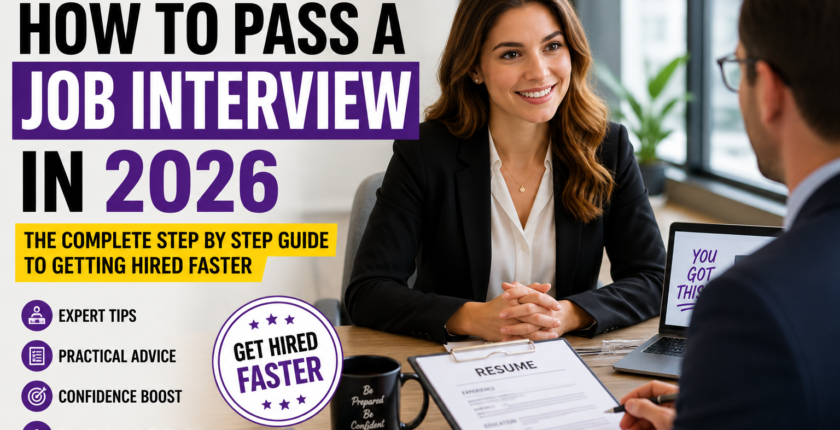
How to Pass a Job Interview in 2026 : The Complete Step by Step Guide to Getting Hired Faster
Honest simple advice. From someone who has watched people mess this up and get it right. No textbook stuff.

In This Article
- The Truth About Interviews Nobody Says Out Loud
- How to Actually Prepare ( Not Just “Research the Company” )
- On the Day Itself
- The Questions That Trip Everyone Up
- Virtual Interviews Have Their Own Problems
- When They Ask About Money
- What Happens After You Leave
The Truth About Interviews Nobody Says Out Loud
Here is something most career guides skip. Getting an interview does not mean you are close to getting hired. It means you cleared the first filter. The interview itself is a completely different thing. And a lot of people bomb it not because they are unqualified but because they showed up like they were guessing.
Hiring managers in 2026 have it easier than ever to compare candidates. They run multiple interviews in one week. They have notes from the last person. They know exactly what answers sound rehearsed versus real. And they talk to their team after you leave.
So the pressure is real. But here is what is also true. Most people who walk into job interviews are underprepared. They skimmed the job description. They have not practiced saying anything out loud. They get asked one unexpected question and spend the rest of the interview recovering from it.
If you prepare properly you are already ahead of the majority. That is not a motivational line. That is just the reality of how most people handle this.
Before Anything Else
Preparation is not reading about interview tips. It is practicing your actual answers out loud until they feel natural coming out of your mouth. That is the part people skip.

How to Actually Prepare (Not Just “Research the Company”)
Everyone says research the company. Very few people explain what that actually means. So here is what to do and why each part matters.
Go through it slowly. Underline the skills they mention more than once. Those are the things they actually care about. Build your answers around those specific points. Not general stuff. Their specific words.
Check their LinkedIn page. See if they posted any news recently. Look at their Google reviews or Glassdoor page to understand the culture. You do not need to memorize their history. You just need one or two real details you can bring up naturally.
Pick three situations from your past where you handled something well. Keep each story under 90 seconds. Structure it simply: what was the situation what did you actually do what came out of it. Say them out loud. Time yourself. They will come up in some form during almost every interview.
Every line on your resume is fair game. If there is a date gap have a calm explanation ready. If you listed a skill you barely used either remove it or be honest about your level. Being caught off guard about your own experience looks worse than the gap itself.
Not “what does the company do” Something like what does a good first three months look like in this role or what is the team currently trying to solve. These questions signal that you are thinking about actually doing the job not just getting hired.
On the Day Itself
A lot of small things go wrong on interview day that have nothing to do with qualifications. Being late even by five minutes already puts you in recovery mode. If it is in person show up ten to fifteen minutes early and wait nearby instead of walking in too soon.
Your energy when you walk in gets noticed before you say a single word. Not talking about being fake happy or overly enthusiastic. Just calm present and not visibly panicked. If you are nervous that is fine. Nerves are normal. But do some deep breathing before you go in. Shake your hands loose. Seriously it helps.
During the interview listen to the full question before you start answering. A lot of people start talking halfway through the question because they think they know where it is going. Sometimes they are wrong and they answer something that was not asked. Take a second to think then answer.

One Simple Rule for the Whole Interview Say what you mean Say it clearly hen stop. Do not fill silence with more words just because the quiet feels uncomfortable. Short clear answers with real examples beat long rambling answers every time.
The Questions That Trip Everyone Up
Some questions feel simple but actually have a lot of weight behind them. Here is how to handle the ones that catch people off guard.
Tell me about yourself
This is not an invitation to list everything on your resume. They already read it. What they want is who are you professionally in 60 seconds. Start with what you currently do or what your background is mention one or two things that are relevant to this role and end with why you are interested in this specific job. That is it. Do not go into your childhood or list every job you have ever had.
What is your biggest weakness
The old trick of saying something fake like “I work too hard” does not work anymore. Interviewers have heard it so many times it actually hurts you. Pick something real. Something you genuinely are working on getting better at. Then say one concrete thing you are doing about it. That combination of honesty and self awareness is actually what they are looking for with this question.
Why are you leaving your current job
Never make this about something bad at your current place. Even if the real reason is a terrible manager or a toxic team. The moment you start venting about your old job, the interviewer starts wondering if you will do the same about them someday. Keep it about what you are looking for not what you are escaping from.
Do you have any questions for us
Always say yes. Ask about what the first 90 days typically look like. Ask what the biggest challenge the team is currently working through. These questions make you sound like someone who is already thinking about how to be useful and that is a good thing.
- Specific answers with real examples
- Honest answers even for hard questions
- Calm tone even when nervous
- Asking thoughtful questions at the end
- Sending a follow up after
- Generic answers like “I am a hard worker”
- Saying anything negative about past jobs
- Lying about skills you barely have
- Talking too long without a clear point
- Saying no to “any questions for us”
One Thing Worth Saying Plainly If you lie about knowing a skill and actually get hired the problem follows you into the job. It is a lot less awkward to say you have basic experience with something than to get caught three weeks in not knowing what you said you knew.

Virtual Interviews Have Their Own Problems
The majority of first round interviews in 2026 happen on Zoom Google Meet or Teams. And there are things that will make you look unprepared that have nothing to do with your actual answers.
Lighting is the big one. If the light source is behind you your face is dark and hard to see. Natural light from a window in front of you or a simple lamp fixes this completely. The camera should be at eye level. Not looking up your nose from a laptop on a table and not looking down from a shelf either. Just straight on.
Test everything the evening before. Audio camera internet connection. If your wifi is unreliable sit closer to the router or use a cable. Close every app you are not using. Put your phone face down and on silent. These are boring things but they matter.
One thing most people do not know: look at the camera when you are speaking not at the person on your screen. It feels strange but from their side it looks like you are making eye contact. It makes a difference in how confident you appear even if you are anxious.
Night Before Checklist Test your audio and video. Clean the visible area behind you. Charge your laptop fully. Write your three stories on a notepad nearby so you can glance if you blank out. Have water on the desk.
When They Ask About Money
This part makes almost everyone uncomfortable. It should not but it does. Here is a simple way to think about it.
If they bring it up early in the process before you have a full picture of the role and responsibilities it is completely reasonable to say you would like to understand the full scope of the position first before naming a number but that you are open to discussing what their range looks like. That is a fair thing to say. It is not being difficult.
When you do need to give a number look up the realistic range first. Sites like Glassdoor PayScale and Salary.com give real salary data by location and role. Come in with a range where the bottom of your range is still a number you would actually accept. Do not lowball yourself just to seem easy to hire. Do not guess randomly either.
What Happens After You Leave
Most people finish an interview and just wait to hear back. There is one more step most candidates skip that costs them nothing but five minutes.
Send a short email within 24 hours. Do not make it a template. Write two or three sentences. Thank them briefly mention something specific from the actual conversation and say you are still interested. That specificity is the part that makes it stick. A hundred candidates send “thanks for your time.” You send something that reminds them of a real thing you discussed. It is a small thing that works.
If they gave you a timeline and it passes without a word one follow up is fine. Keep it short. Ask if there is any update and say you are still keen on the role. One email. Not three. Not a daily check in. Just one.
And while you wait keep applying to other places. Even if that interview felt perfect. Nothing is confirmed until there is a written offer in your inbox. Keeping your applications moving also takes the mental pressure off while you wait and that actually helps you come across better in any follow-up conversations.
Useful Tools Worth Bookmarking
- Glassdoor Interview Reviews real questions people were asked at specific companies
- LinkedIn Interview Prep
- practice with a video recording feature
- Pramp free live mock interviews good for tech roles
- The Muse solid answer breakdowns for common questions

Here is something worth keeping in mind. The people who get job offers are rarely the most qualified people who applied. More often they are the person who showed up the most prepared communicated the clearest and made the interviewer feel confident about bringing them on board.
That confidence does not come from talent alone. It comes from practice and preparation. The first interview you go into might feel rough. Maybe the second one too. But each time you learn something about how you come across what questions caught you off guard and what you would say differently. That is genuinely how people get better at this.
Start where you are right now. Prepare more than feels necessary. Walk in like you belong there.