
Log In
Sign Up
Healthcare Jobs
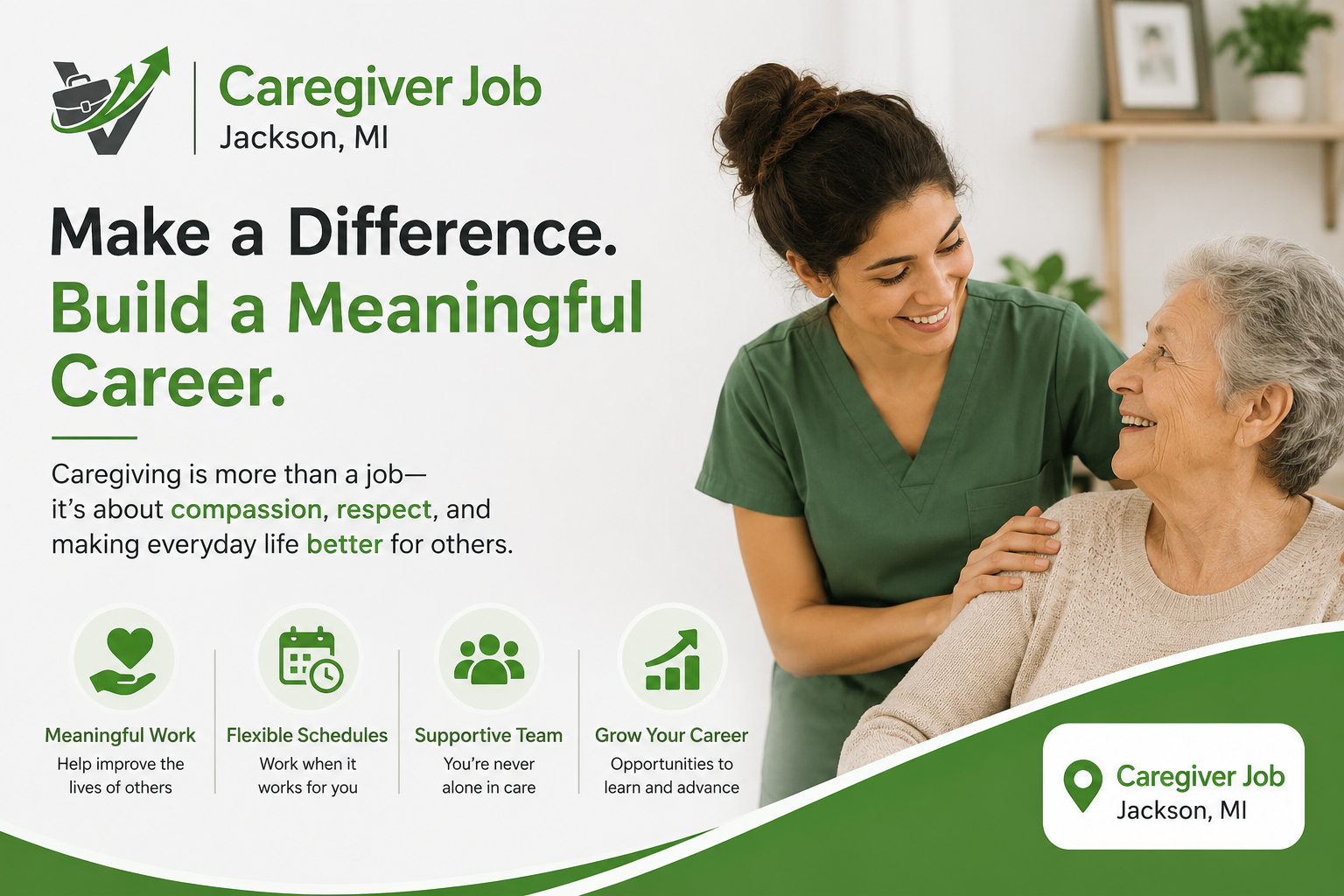
Caregiver Job Jackson MI: Pay, Duties & Real Work Experience Explained Part Time

Home Care Jobs · Michigan
So You’re Thinking About a Caregiver Job Jackson MI Here’s What to Actually Expect
Most people click apply on a caregiver listing because the schedule sounds flexible and the daily pay sounds convenient. Both of those things can be true. But there’s a version of this job that people are genuinely happy doing for years and a version that burns people out in three weeks and the difference usually comes down to whether they understood what they were walking into.
The Pay Let’s Start Here Because Everyone Wonders
The listed range for this role sits between $13.75 and $14.02 per hour. That’s an honest working class wage in Jackson MI not spectacular but not dishonest either. Jackson’s cost of living is lower than Michigan’s metro areas so this pay stretches further than it would in Detroit or Ann Arbor.
Starting pay
$13.75
Per hour, entry level
Top of range
$14.02
Per hour, same role
Part time avg
~$420
Weekly, before tax
Travel pay
Included
Between client stops
One thing worth noting travel time between client assignments is paid here. That’s not guaranteed at every home care agency. If you’re driving from one client’s house to another that time counts on your clock. For part time workers taking multiple short shifts in a day this adds up to a meaningful difference in your actual take home.
Part time hours are not always consistent week to week. Client cancellations, hospitalizations or family visits can reduce your scheduled hours without warning. New hires sometimes find themselves working 20 hours in a week when they expected 30. It’s worth asking during your interview how cases are assigned and what happens when a client cancels.
Daily Pay How It Actually Works in Practice
The name is a little misleading. Daily pay doesn’t mean your wages automatically deposit each evening. What it means is that after you work a shift you can request early access to wages you’ve already earned instead of waiting for the standard two week pay cycle.
Most agencies use a third party platform to make this happen. You log into the app see your available balance (the hours you’ve worked so far) and request a transfer. It usually arrives within minutes or by the next business day depending on which speed you choose. There’s typically a small transaction fee usually under three dollars per transfer for instant delivery.
For someone starting a new job without much savings buffer this is genuinely useful. Your first “official” payday might be two weeks out but if you work Monday you could access those wages by Tuesday. That’s a real advantage when you’re getting started.
It’s not extra money. It’s not a bonus. It’s just your own earned wages available earlier. Once you’re settled into a rhythm financially most caregivers stop using it daily and just use regular payday. But the option is there when you need it.

What You’ll Actually Be Doing No Vague Descriptions
As a Home Health Aide your work happens inside someone’s home. Not a facility not a hospital floor someone’s actual house. That changes the dynamic of the job more than most people expect.
Your tasks on a given shift might include helping a client shower and get dressed in the morning making sure they eat breakfast tidying up their living space reminding them to take medication (you’re not administering it just reminding) and maybe going with them to a medical appointment. Some clients are mostly independent and just need a little assistance and companionship. Others need much more hands on physical support.
The physical side of it
This job occasionally requires lifting or transferring clients helping someone move from a bed to a wheelchair for example. The listing mentions occasional lifting up to 50 pounds. That’s real. If you have existing back or knee issues. it’s worth being upfront about that during the hiring process so you can be matched with clients whose needs fit your physical capacity.
Most shifts also mean being on your feet for several hours. You’re not sitting at a desk. Even on a “quiet” shift you’re walking through someone’s home doing tasks staying alert to how the client is doing. By week three your body knows you have a physical job.
The emotional side this part matters more than people admit
Some of your clients will be lonely. Some will be in pain. Some will be living with dementia or cognitive decline and won’t always know what day it is or who you are. You might be the only non family person they see all week. That’s meaningful work but it also requires a certain kind of patience that can’t be faked for long.
The caregivers who stay in this field for years aren’t doing it purely for the paycheck. Most will tell you there’s a specific moment usually in the first few weeks where a client said something or smiled at something, and that was it. The job clicked differently after that. If you’re someone who genuinely cares about people, this work has a kind of meaning that’s hard to find in warehouse or retail roles.
Schedule Reality What Flexible Actually Means Here
Flexible scheduling in home care usually means the agency can work around your availability not that you pick any shift you want. As a new hire you’ll likely get offered whatever shifts currently need coverage. Morning clients, afternoon clients, maybe a weekend slot. Over time as you build reliability and a track record, you get more say in your schedule.
For a part time role in Jackson you might work three or four days a week with shifts ranging from two to six hours depending on client needs. Some caregivers prefer this they have other responsibilities and don’t want full time hours. Others find the inconsistency frustrating. Know which category you fall into before you start.

Getting Hired Faster Than Most Jobs But Not Instant
Home care agencies typically move quickly. Applications usually get a response within a few days and the interview process is straightforward a conversation about your experience, your availability, your comfort with personal care tasks, and a background check.
Orientation is paid here, which is worth noting. Some employers make you sit through unpaid training before your first real shift. Paid orientation signals that the agency treats onboarding like actual work because it is.
- No reliable transportation is one of the fastest ways to get removed from consideration. Jackson is a mid sized city and clients are spread across residential areas you need a car.
- Background check issues can disqualify applicants depending on offense type and how recent it was. Michigan has specific rules around healthcare employment and criminal history.
- Very rigid availability if you can only work one specific time slot makes it hard for agencies to place you quickly with clients.
- Prior experience in any caregiving childcare, or patient care role even informal family caregiving is viewed positively even without formal credentials.
- Current or willing to get CPR certification makes you more immediately placeable.
What New Hires Get Wrong in the First Month
The biggest mistake new caregivers make isn’t doing a task incorrectly it’s failing to communicate. If a client seems more confused than usual, if they haven’t eaten, if something looks physically wrongthat observation needs to go to a supervisor or nurse immediately. New HHAs sometimes stay quiet because they don’t want to seem like they’re overreacting. In this job the opposite instinct is better.
Documentation is another area where beginners slip up. Every visit requires a record of what you did how the client was anything notable. The charting might be done through a mobile app. Do it in real time not from memory three hours later. One undocumented shift can create billing and legal headaches that ripple upward.
And then there’s the boundary question. Clients sometimes ask for things that feel harmless but cross professional lines borrowing money running personal errands with their cards being asked to “just stay longer without logging it.” These feel like small favors. They’re not. Most agencies have strict policies here and violations even unintentional ones can end employment quickly.
The Benefits Package Worth Reading
Full time or qualifying part time employees get access to medical, dental, and vision coverage plus a 401(k) with employer match. For part time home care benefits access isn’t always a given so this is worth confirming during your interview specifically what hours threshold qualifies you.
Free online training classes are available beyond mandatory orientation. If you’re thinking about eventually moving into nursing medical assisting or a higher level care role, those resources can help you build skills without paying out of pocket. Career advancement within home health is real HHAs who stay consistent and pursue additional certifications do move into supervisory and clinical support roles over time.
Be Honest With Yourself This Job Isn’t for Everyone
- If you need guaranteed full time hours right from week one part time home care may leave you short while you build your client load.
- If personal care tasks bathing hygiene assistance make you deeply uncomfortable that discomfort tends to show and clients notice.
- If you’re in it purely for the daily pay feature and have no real interest in working with elderly or disabled individuals the emotional labor will feel like a burden fast.
- If you’re a patient person who’s good at adapting to different personalities this job fits naturally.
- If you want flexibility genuine human connection in your workday and a job where your effort directly improves someone’s life there’s real satisfaction in that.
Worth Applying or Not?
Straight answer
For Jackson, MI, this is a solid entry level healthcare role with real benefits, paid travel time, and daily pay access that genuinely helps when you’re getting started. The pay is modest but honest for the area. The work is physically and emotionally real not something you can coast through but for the right person, it’s one of the more meaningful jobs available without a degree. If you’ve cared for a family member worked in any service role and have a functioning car you’re a reasonable candidate. Go in understanding the part time schedule variability and you’ll have a more grounded first few weeks than most new hires do.
🔗 Apply & More Job Options
You can also apply for caregiver roles through official job websites and trusted platforms to find real openings easily.
For your convenience, we also share top USA jobs from LinkedIn and other reliable sources directly on Vestrz so you don’t need to search everywhere. On Vestrz, you can explore updated listings like warehouse jobs in the USA, driver jobs, and other latest opportunities in one place. This helps you save time and find relevant jobs faster.