jobs for International Students in USA – 2026 Career Guide
Career Guide · 2026
Best jobs for international students in USA
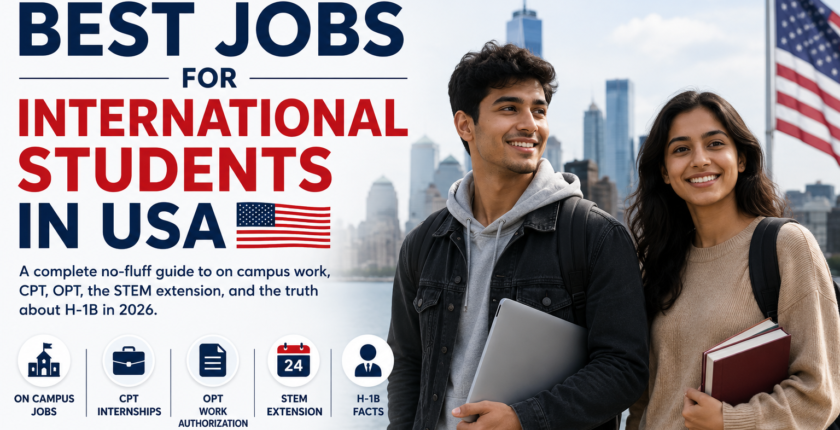
A complete no fluff walkthrough of on campus work, CPT, OPT the STEM extension and what’s actually true about H 1B right now written for students who’d rather know early than find out the hard way.

What most students get wrong before they even start
The biggest misunderstanding I see isn’t about finding a job. It’s about timing. Students assume they can casually start job hunting in their final semester the same way they might back home. In the US your work authorization clock starts ticking the moment you enroll and the strongest candidates have already built a track record by then: on campus jobs an internship through CPT, maybe a research assistantship. If you wait until graduation to think about employment you’re not behind by a few weeks. You’re behind by two or three years of missed opportunities.
The second misunderstanding is thinking a job offer automatically means you can work. It doesn’t. Every job an international student takes has to fit inside a specific legal category and getting that wrong can cost you your status. So before we talk about which jobs are actually good let’s walk through what you’re legally allowed to do because that determines everything else.
White box simple
Nobody can tell you with certainty what 2027 looks like. Anyone who claims they can is guessing.
Check your university’s international office page or USCIS directly before making big decisions. This is one area where outdated blog advice can genuinely hurt you.

What’s actually happening with H 1B right now
A lot of students panicked in late 2025 when a new $100,000 H 1B fee was announced. Here’s the part that matters for you specifically: that fee applies to new H 1B petitions filed for someone outside the US. If you’re already in the country on F 1 status and your employer files to change your status to H 1B without you leaving that fee generally does not apply to you. This has been confirmed through USCIS guidance and reported by multiple university international offices.
That doesn’t mean H 1B got easier. Separate from the fee there’s continued pressure toward higher prevailing wage requirements and tighter scrutiny of entry level roles which makes the lottery more competitive for students just starting out.
Tip
Don’t assume sponsorship is guaranteed just because a company has sponsored before. Ask directly in interviews whether they’ve sponsored H-1B for entry-level hires recently, not just senior staff..
Where international students are actually getting hired
Tech remains the most realistic path not because every company sponsors but because the industry has the most established processes for it. Software engineering data analytics and cyber security roles at mid size and large companies tend to have HR teams who’ve handled OPT and H 1B paperwork before which matters more than people think. A small company that’s never sponsored anyone is a much bigger gamble even if the job itself looks great.
Outside tech accounting and finance roles at the big firms (the major audit and consulting firms) have consistent track records with OPT and H 1B. Healthcare adjacent fields biostatistics health informatics pharmaceutical research are also seeing steady demand. Academic and research positions postdocs lab roles university affiliated research jobs are worth considering too since universities themselves are cap exempt for H 1B sponsorship meaning no lottery at all.
Mistakes that quietly end up costing students the most
- × Picking a major purely for “easy sponsorship odds” without considering they’ll actually be miserable doing the work for three years.
- × Not networking until the final semester when most strong internship and entry level pipelines were already filled months earlier.
- × Assuming any company can sponsor a visa. Plenty can’t or won’t regardless of how much they like you.
- × Letting CPT or OPT paperwork sit until the last minute then scrambling when USCIS processing takes longer than expected.
- × Avoiding career services because “they’re for American students” when most career centers have international student advisors who deal with this exact situation daily.

A rough roadmap year by year
Year 1 · Freshman Get comfortable take an on campus job if you need income start attending career fairs even if you’re not ready to apply for anything yet just to learn the landscape.
Year 2 · Sophomore Build a resume that doesn’t look like a template start reaching out to alumni from your country or program on LinkedIn ask real questions about how they handled CPT.
Year 3 · Junior This is internship hunting season. Treat it seriously get CPT authorization sorted early and don’t be afraid to apply broadly.
Year 4 · Senior Line up your OPT application timeline the moment you know your graduation date and start having direct sponsorship conversations in every interview not as an afterthought at the end.
Tools that actually help
Handshake is where a lot of university specific internship and job postings live and it’s underused by international students who default to general job boards. LinkedIn is non negotiable not just for applying but for messaging alumni directly most people respond better than you’d expect to a short specific message. Your school’s career services portal usually has a filter for visa sponsorship or work authorization type, use it. And for anything legal or status related the official source is always USCIS.gov and your school’s international student office not a forum thread or a YouTube video, however confident it sounds.

Is it worth it
I won’t pretend this path is simple because it isn’t. There’s real pressure real paperwork and real uncertainty that domestic students never have to think about. But I’ve also watched plenty of students navigate it successfully not because they were exceptionally lucky but because they treated the legal and career sides as equally important from year one instead of figuring it out in a panic during their last semester. If you start early, ask the boring administrative questions before they become emergencies and pick a field with genuine sponsorship history this is absolutely still a workable path in 2026. It’s just not a passive one.